2013年10月28日星期一

Nanoscale Engineering Boosts Performance of Quantum Dot LEDs

Dramatic advances in the field of quantum dot light emitting diodes (QD-LEDs) could come from recent work by the Nanotechnology and Advanced Spectroscopy team at Los Alamos National Laboratory. “QD-LEDs can potentially provide many advantages over standard lighting technologies, such as i...


postdoctoral-researcher-young-shin-park-characterizing-emission-spectra-of-leds-in-the-los-alamos-national-laboratory-optical-laboratory

postdoctoral-researcher-young-shin-park-characterizing-emission-spectra-of-leds-in-the-los-alamos-national-laboratory-optical-laboratory


Dramatic advances in the field of quantum dot light emitting diodes (QD-LEDs) could come from recent work by the Nanotechnology and Advanced Spectroscopy team at Los Alamos National Laboratory.


Postdoctoral researcher Young-Shin Park characterizing emission spectra of LEDs in the Los Alamos National Laboratory optical laboratory. (source: Los Alamos National Laboratory)


Quantum dots are nano-sized semiconductor particles whose emission color can be tuned by simply changing their dimensions. They feature near-unity emission quantum yields and narrow emission bands, which result in excellent color purity. The new research aims to improve QD-LEDs by using a new generation of engineered quantum dots tailored specifically to have reduced wasteful charge-carrier interactions that compete with the production of light.


“QD-LEDs can potentially provide many advantages over standard lighting technologies, such as incandescent bulbs, especially in the areas of efficiency, operating lifetime and the color quality of the emitted light,” said Victor Klimov of Los Alamos.


Incandescent bulbs, known for converting only 10 percent of electrical energy into light and losing 90 percent of it to heat, are rapidly being replaced worldwide by less wasteful fluorescent light sources. However, the most efficient approach to lighting is direct conversion of electricity into light using electroluminescent devices such as LEDs.


the-quantum-dot-device-structure-shown-with-a-transmission-electron-microscopy-tem-image-of-a-cross-section-of-a-real-device

the-quantum-dot-device-structure-shown-with-a-transmission-electron-microscopy-tem-image-of-a-cross-section-of-a-real-device


The quantum dot device structure shown with a transmission electron microscopy (TEM) image of a cross-section of a real device.(source: Los Alamos National Laboratory)


Due to spectrally narrow, tunable emission, and ease of processing, colloidal QDs are attractive materials for LED technologies. In the last decade, vigorous research in QD-LEDs has led to dramatic improvements in their performance, to the point where it nearly meets the requirements for commercial products. One outstanding challenge in the field is the so-called efficiency roll-off (known also as “droop”), that is, the drop in efficiency at high currents.


“This ‘droop’ problem complicates achieving practical levels of brightness required especially for lighting applications,” said Wan Ki Bae, a postdoctoral researcher on the nanotech team.


By conducting spectroscopic studies on operational QD-LEDs, the Los Alamos researchers have established that the main factor responsible for the reduction in efficiency is an effect called Auger recombination. In this process, instead of being emitted as a photon, the energy from recombination of an excited electron and hole is transferred to the excess charge and subsequently dissipated as heat.


A paper, “Controlling the influence of Auger recombination on the performance of quantum-dot light-emitting diodes” is being published Oct. 25 in Nature Communications. In addition, an overview article on the field of quantum-dot light-emitting diodes and specifically the role of Auger effects appeared in the September Materials Research Society Bulletin, Volume 38, Issue 09, also authored by researchers of the Los Alamos nanotech team.


Not only has this work identified the mechanism for efficiency losses in QD-LEDs, Klimov said, but it has also demonstrated two different nano-engineering strategies for circumventing the problem in QD-LEDs based on bright quantum dots made of cadmium selenide cores overcoated with cadmium sulfide shells.


The first approach is to reduce the efficiency of Auger recombination itself, which can be done by incorporating a thin layer of cadmium selenide sulfide alloy at the core/shell interface of each quantum dot.


The other approach attacks the problem of charge imbalance by better controlling the flow of extra electrons into the dots themselves. This can be accomplished by coating each dot in a thin layer of zinc cadmium sulfide, which selectively impedes electron injection. According to Jeffrey Pietryga, a chemist in the nanotech team, “This fine tuning of electron and hole injection currents helps maintain the dots in a charge-neutral state and thus prevents activation of Auger recombination.”


These studies were funded by a grant from the U.S. Department of Energy Office of Science.


Nanoscale Engineering Boosts Performance of Quantum Dot LEDs

Philips Lumileds Plans to Introduce Flip-Chip Technology into Mid-Powered LEDs

LED Forum Taipei 2013: Philips Lumileds Plans to Introduce Flip-Chip Technology into Mid-Powered LEDs. Its Asia Regional Marketing Director says Large volume of mid-powered LED are applied in downlights and panels.. Indoor lighting applications for downlights and panels is hoped to turn to...


philips-lumileds-plans-to-introduce-flip-chip-technology-into-mid-powered-leds-LED-forum-2013

philips-lumileds-plans-to-introduce-flip-chip-technology-into-mid-powered-leds-LED-forum-2013


Mid-power LEDs performance in 2013 has been stellar. Mid-power LED has become the mainstream for interior lighting, including retrofit bulbs, remarked Sean Zhou, Asia Regional Marketing Director, Philips Lumileds during the LEDforum Taipei 2013. Large volume of mid-powered LED are applied in downlights and panels.. Indoor lighting applications for downlights and panels is hoped to turn to mid-powered LEDs in the future. The Philips Lumileds flip-chip high voltage currents and small sized packaging can achieve better luminosity (lm/w) and price/performance ratio (lm/$) through. The company plans to introduce flip-chip technology into the mid-power LED market in the future.

It is evident that mid-powered LED product line is drawing most attention from the market this year. Zhou pointed out mid-powered LEDs have become mainstream for interior lighting and is already largely applied in retrofit bulbs, downlights, and panels. Mid-powered LEDs can even be seen applied in outdoor lighting, there are cases of the product being used in street lights now. It is still unclear as to whether mid-power LEDs or high-powered LEDs will become the mainstream because different lighting fields require support from different power products.


Philips Lumileds plans to introduceflip-chip technology to mid-powered LEDs in the future. The first chip-scale-package product LUXEON flip-chip by Philips Lumileds made the package size nearly equal to the size of the chip. Reducing the size of the package is conducive towards increasing flexibility of application designs, and can reach a better luminosity (lm/w) and price/performance ratio (lm/$) performance through high voltage currents and small sized packaging.


The company’s LUXEON flip-chip use of inverted CSP technology can omit the wiring process. This not only allows the product to achieve high voltage and at the same time reduces package size, while increasing package density. Philips Lumileds is optimistic about the flip-chip’s advantages in luminosity efficacy, lm/$, and package size. The company plans to use flip-chip technology in mid-powered LEDs.


About Philips Lumileds


Philips-LumiLEDs-logo

Philips-LumiLEDs-logo


Philips Lumileds Lighting Company is the manufacturer of a wide range of high-power/high-efficiency light-emitting diodes (LEDs). It is now a fully owned division of Philips Lighting. LumiLeds Lighting B.V. was formed in November 1999 as a joint venture between Philips Lighting and Agilent Technologies, a spin-off of Hewlett-Packard. At the time of formation, it was an equal partnership with each company owning a 50% share in Lumileds Lighting.[1] In August 2005, Philips acquired a controlling stake in Lumileds when it purchased Agilent’s 47% share of the company for $950 million USD. This resulted in Philips owning 96.5% of the company with the remaining 3.5% owned by employees. In December 2006/January 2007, Philips acquired the remaining 3.5% of the company, making Lumileds a fully owned subsidiary of Philips Lighting.


Philips Lumileds Plans to Introduce Flip-Chip Technology into Mid-Powered LEDs

Carpenter: The Green is excellent for winter light therapy - Customer Reviews

Carpenter posted his review on 3-3W 9W White High Power LED Light Lamp Spot Bulb E27 October 27, 2013 , he said”The Green is excellent for winter light therapy…The green of the Topledlight LEDs, wavelengths 520-530 nm, is effective for circadian entrainment and easier on the eyes...


Carpenter posted his review on 3-3W 9W White High Power LED Light Lamp Spot Bulb E27 October 27, 2013


I bought 10 of these in green. I use them in the evenings in addition to my normal lighting to extend my daylight hours, to help me avoid seasonal depression brought on by short winter days. The green of the Topledlight LEDs, wavelengths 520-530 nm, is effective for circadian entrainment and easier on the eyes than the blue.


They are bright, inexpensive for the amount of light they give, and have good build quality. I would have given them 5 stars except that one of the ten lights did not work. I’ve bought various lights from Topledlight since 2011, that was the only problem I’ve ever had with their products.


Product Quick View:


9w-high-power-LED-bulb-light-e27

9w-high-power-LED-bulb-light-e27


3-3W 9W White High Power LED Light Lamp Spot Bulb E27
Products Model: BY-LB3X3W
Key Specs: 6500K-7500K, 7 Emitted Colors, 15-120 deg Viewing Angle, 3x3W 50mm, Aluminum
Wholesale Price: US$9.99, MOQ: 2 PCS
Free Shipping from China


Buy this item on TopLEDlight.com


Carpenter: The Green is excellent for winter light therapy - Customer Reviews

2013年10月27日星期日

SNS offer: TopLEDlight.com 5% off coupons

Share this event to any SNS platform, you get a U$1 off coupon. (Coupon Minimum Order amount US$20)
Like KiwiLighting Facebook page, you get a U$1 off coupon. (Coupon Minimum Order amount US$20)
Follow us on any SNS platform, you get a U$2 off coupon. (Coupon Minimum Order amount US$40)
Share a...


sns-promotion-topLEDlight-5p-off

sns-promotion-topLEDlight-5p-off


We’ve just recently joined some social networks. Embrace social media so late, are we out of date? ha-ha. We are sharing KiwiLighting news, promotion events, products reviews, topLEDlight.com new arrivals and featured goods, as well as LED knowledge, LED technologies, and LED industrial news on these SNS platforms. We are also expecting these SNS platforms be good communication platforms, and ourselves be watched by all of you. We launched a promotion in order to let more people be informed and benefit from this.


SNS Promotion details:


Ways to get coupons:


  • 1, Share this event to any SNS platform, you get a U$1 off coupon. (Coupon Minimum Order amount US$20)

  • 2, Like KiwiLighting Facebook page, you get a U$1 off coupon. (Coupon Minimum Order amount US$20)

  • 3, Follow us on any SNS platform, you get a U$2 off coupon. (Coupon Minimum Order amount US$40)

  • 4, Complete job 1-3, you get a U$4 off coupon. (Coupon Minimum Order amount US$80)

  • 5, Complete job 1-3 on two or more platforms, you get a 5% off coupon.(No Minimum/maximum order amount)

  • 6, Share a product to any SNS platform, you get a 2% off coupon for your shared product. (Share to Google Plus, you get 3% discount)

  • 7, Write a review on the products you bought and share your reviews to a SNS platform, you get 5% off for your next order.


Who to follow?


Our SNS URL:


Email: info@topledlight.com


What SNSs may I share to?


Any SNS. In fact, you may share to any website. As long as you provide the Shared Page URL, we will send you the coupon.


Procedures:


  • 1, Sign up on TopLEDlight.com (Not required, but we recommend)

  • 2, When you complete any of the above 7 jobs, just email us (better with URL of the very feed of e.g. ), then we will email you the coupons. You can also @KiwiLighting on Twitter or leave a message on our Facebook page to get your coupons.

  • 3, Redemption your Coupon Code in Step 2 of 3 – Payment Information. see image instructions


FAQ:


  • Promotion period: 2013.10.28 – 2013.11.28


  • Coupons validation period: 2013.10.28 – 2013.12.31


  • How to use a coupon: in Step 2 of 3 – Payment Information, input the code in the Redemption Code box


  • Products Restriction: there is no restriction, coupons can be used on any product.


  • What’s the relationship between Kiwi Lighting and TopLEDlight: TopLEDlight.com is the online store of Kiwi Lighting.


Hoping this will help us to better serve our customers.


How to use a coupon


how-to-use-a-coupon-1

how-to-use-a-coupon-1


how-to-use-a-coupon-2

how-to-use-a-coupon-2


how-to-use-a-coupon-3

how-to-use-a-coupon-3


sns-promotion-topLEDlight-5p-off-2

sns-promotion-topLEDlight-5p-off-2


SNS offer: TopLEDlight.com 5% off coupons

50W LED Grow Light - US$31.99

50W Hydroponic Plant LED Grow Light
Products Model: BY-HP50WRB
Key Specs: 50W, Red – 620nm~630nm Blue – 460nm~470nm, VF 28V ~ 36V, IF 3A
Wholesale Price: US$31.99, MOQ: 1 PCS
Free Shipping from China
Buy this item on TopLEDlight.com


50W Hydroponic Plant LED Grow Light
Products Model: BY-HP50WRB
Key Specs: 50W, Red – 620nm~630nm Blue – 460nm~470nm, VF 28V ~ 36V, IF 3A
Wholesale Price: US$31.99, MOQ: 1 PCS
Free Shipping from China


Buy this item on TopLEDlight.com


50w-hydroponic-plant-led-grow-light

50w-hydroponic-plant-led-grow-light


50W Red Blue Multichip LED For Hydroponic Plant Grow Light Lamp DIY


  • Products Model #: BY-HP50WRB

  • Manufactured by: TopLedLight

  • Category: 50W 50 Watt High Power LED

  • Retail price: US$34.99

  • Wholesale Price: US$ 31.99

  • MOQ: 1 PCS, In Stock , 500 Units in Stock

  • This item is free shipping


Product Description


Specification


  • Lens Color: Water Clear

  • Emitted Color: Red Blue

  • Wavelength: Red – 620nm~630nm Blue – 460nm~470nm

  • DC Forward Voltage (VF): 28V ~ 36V

  • DC Forward Current (IF): 3A


Packing List


  • 1 X 50W Hydroponic Plant LED Grow Light


50W LED Grow Light - US$31.99

2013年10月26日星期六

Toshiba announces second-generation silicon-based LEDs

Toshiba Electronics Europe has announced a second-generation of the company’s high-power gallium-nitride-on-gallium-nitride (GaN-on-GaN) LEDs that for the first time include 2700K warm-white emitters. Moreover, the new Leteras family of products are specified at efficacy above 100 lm/W...


Toshiba-gallium-nitride-on-gallium-nitride-GaN-on-GaN-LED

Toshiba-gallium-nitride-on-gallium-nitride-GaN-on-GaN-LED


New 1W GaN-on-Si LEDs break the 100 lm/W level in warm white with Toshiba stating that volume production will begin in November 2013.


Toshiba Electronics Europe has announced a second-generation of the company’s high-power gallium-nitride-on-gallium-nitride (GaN-on-GaN) LEDs that for the first time include 2700K warm-white emitters. Moreover, the new Leteras family of products are specified at efficacy above 100 lm/W even for the warm-white 1W LEDs.


Of course, the big question will be if Toshiba is really ready to ship the products in volume production. Otherwise, the specs matter little. Back in December 2012, Toshiba said the silicon-based TL1F1 family had entered production and subsequently published a detailed datasheet on the LEDs in January 2013. But those earlier LEDs have yet to show up in a commercial product.


Of course, it could be that specs trailing sapphire-based LEDs have limited the customer acceptance of the first-generation products. Some of those LED models have efficacy in the 80-lm/W range and 3000K was the warmest CCT for which Toshiba published a datasheet.


The efficacy on the second-generation TL1F2 LEDs will range from 104 lm/W to 135 lm/W over the 2700K to 5000K CCT range with 70- and 80-CRI models available. The basic product specs are listed in datasheets noted as underdevelopment on the Toshiba Japan website. Neither the datasheets nor press release detail at what temperature the efficacy figures apply.


It was also strange to see the second-generation announcement come out of Toshiba’s European operation. In the past, new LED announcements from Toshiba have originated in Japan.


Most recently, Toshiba announced mid-power GaN-on-Si LEDs back in July. Those LEDs still substantially trailed similarly-sized sapphire-based LEDs, and it’s not clear that Toshiba has shipped the mid-power LEDs at this time.


About Toshiba Electronics


toshiba-logo

toshiba-logo


Toshiba Corporation (株式会社東芝 Kabushiki-gaisha Tōshiba?) is a Japanese multinational engineering and electronics conglomerate corporation headquartered in Tokyo, Japan. Its products and services include information technology and communications equipment and systems, electronic components and materials, power systems, industrial and social infrastructure systems, household appliances, medical equipment, office equipment, lighting and logistics.

Toshiba announces second-generation silicon-based LEDs

New York City transition street lights to LEDs

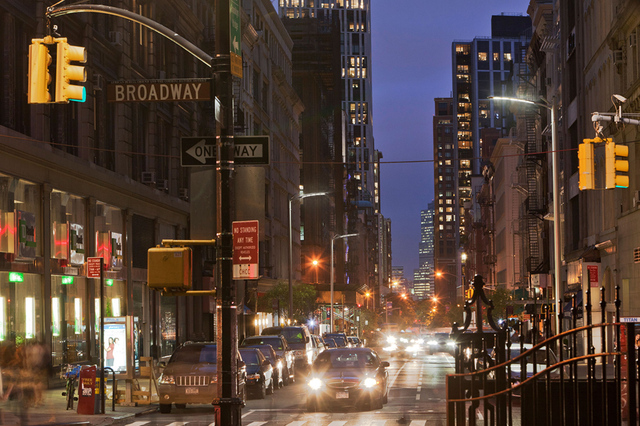
New York City is transitioning its 250,000 street lights to energy-efficient LEDs in an upgrade that should be completed by 2017. LED street lights will save city taxpayers around $14 million a year once the transition is complete.


New-York-city-transition-street-lights-to-LEDs

New-York-city-transition-street-lights-to-LEDs


We formerly reported Philips Upgrade Buenos Aires Street Lights with LED, this time New York City is also upgrading its street lights to LEDs.


New York City is transitioning its 250,000 street lights to energy-efficient LEDs in an upgrade that should be completed by 2017. CBS reports that Mayor Michael Bloomberg announced the time frame today, noting that the upgraded lights will save city taxpayers around $14 million a year once the transition is complete. The savings are two-fold: LEDs consume less power than their high-pressure sodium counterparts, resulting in around $6 million in savings, and they also have a much longer lifespan, lasting up to 20 years. Current street lights last an average of just six years, Bloomberg said.


The project has been a long time in the making. New York City has been testing LED lights for a number of years — they’re currently used in areas of Central Park and on the “necklace” lights on the cables of East River bridges, to name just a few locales — with the city’s Department of Transportation partnering with the Climate Group and the US Department of Energy in 2009 for several studies on the efficacy of the technology. This new announcement comes as more and more cities have started adopting LED lights; last year Los Angeles completed its own massive LED project, retrofitting 141,089 street lights with LED bulbs. New York’s LED project is expected to be the largest of its kind in the United States when completed.


“With roughly a quarter-million street lights in our city, upgrading to more energy efficient lights is a large and necessary feat,” Mayor Bloomberg said in a statement. “It will save taxpayers millions of dollars, move us closer to achieving our ambitious sustainability goals, and help us to continue reducing city government’s day-to-day costs and improving its operations.”


New York City transition street lights to LEDs